Corey Allen Kotler
April 18, 2017
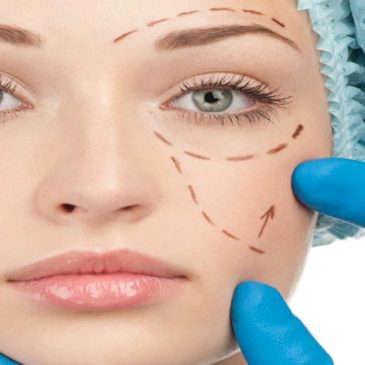
The obsession of the rich and famous with plastic surgery is growing more and more every year. In 2016 alone, 300,000 Americans underwent breast augmentation, while no less than 7 million people opted for anti-wrinkle injections. But how much exactly does the world spend on the vanity of looks?
According to a report published by the American Society of Plastic Surgeons (ASPS), Americans spent more than ever before — $16 billion — on cosmetic plastic surgery and minimally-invasive procedures in 2016. That means that on average, every day, Americans spend a whopping $43 million on plastic surgery.
Costs vary greatly depending on location and surgeon experience, as well as potential insurance coverage (spoiler alert — in the US, you’re rarely covered for this type of intervention). This has pushed many patients to opt for shady, often unqualified clinics, something which ASPS strongly warns against. Plastic surgery can backfire heavily and can pose serious health hazards.
“The most important consideration for patients should be choosing a board-certified, ASPS-member surgeon,” said ASPS President Debra Johnson, MD. “Before you undergo any procedure, make sure you’re putting yourself in the hands of only the most qualified and highly trained plastic surgeons. The cost of any procedure is not nearly as important as doing your homework and selecting a surgeon whose primary focus is your safety.”
The report also indicates that the average price of procedures is constantly going down, by 2.7 percent from 2015 to 2016. But how much does a surgery cost?
According to the report, these are the most popular cosmetic surgeries, along with their average price:
Breast augmentation (290,467 procedures): national average cost of $3,719. Just over 28,000 people removed breast implants. Another 101,000 people had breast lift surgery.
Liposuction (235,237 procedures): national average cost of $3,200
Nose reshaping (223,018 procedures): national average cost of $5,046
Tummy tuck (127,633 procedures): national average cost of $5,798
Buttock augmentation (18,489 procedures) national average cost of $4,356
You can read the entire statistics here.
The report also made a similar list for minimally invasive procedures:
Wrinkle treatment injections (botulinum toxin type-A, such as Botox®, Dysport®) (7 million procedures): national average cost of $385
Hyaluronic acid fillers (2 million procedures): national average cost of $644
Chemical peel (1.3 million procedures): national average cost of $673
Microdermabrasion (775,014 procedures): national average cost of $138
Laser treatments (Intense Pulsed Light) (656,781 procedures): national average cost of $433
This data only comes from procedures conducted by certified ASPS doctors as well as other physicians certified by
American Board of Medical Specialties — the real figure considering unrecognized boards is likely much higher.
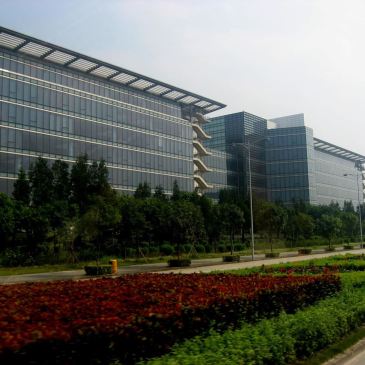
Huawei’s is making a fresh attempt at launching into the US market to challenge Apple and Samsung’s monopoly on premium smartphones. In its latest attempt to break into America, Huawei is trying to get its Chinese mobile chipset accredited by AT&T.
The world’s third-largest smartphone maker, Huawei’s presence isn’t felt in the States at all, with no US carriers selling the company’s phones for their main services. Nevertheless, it’s worldwide reach is still a threat to Apple and Samsung, and chipset accreditation is vital to breaking into the US market.
Android smartphone makers primarily use Qualcomm’s chipsets, but Huawei uses a Kirin line of processors by Huawei subsidiary HiSilicon. Even if the Chinese chips pass the AT&T accreditation, deals would have to be made to distribute specific phones.
Sources told The Information that there was a possibility of a HiSilicon-powered Huawei phone in the US after discussions between Huawei and AT&T. But it doesn’t look like the former is about to give up on the American Dream anytime soon as evidenced by its latest moves.
Huawei collaborated with Google to manufacture one of the US company’s Nexus smartphones, and they also launched branded phones in the US via Best Buy and Amazon. Walmart also sell an AT&T prepaid service phone made by Huawei, which is cobranded.
However, the brand has had issues with regulation in the past after a 2012 congressional report raised concerns that Beijing was using gear to spy on the US, a claim Huawei denied. Then again, the Chinese company’s market share has increased from 7.8% (2015) to 9.8% last year. This closes the gap significantly with Apple’s 15% and Samsung’s 22% share.
Huawei bringing its global handsets (with its HiSilicon chipset) into the US carrier market is its most recent move after a string of semi-failed attempts, like the disappointing sales of the Honor 8 smartphone.
They are stuck between a rock and a hard place when it comes to US carriers. Verizon is too expensive due to its cellular standard, while T-Mobile is embroiled in a lengthy dispute with its Chinese competitor. Huawei also doesn’t have the advertising advantages afforded to American brands like Samsung, who spend significant amounts on generating publicity during the Super Bowl, for example.
There is also some competition a little closer to home, like ZTE—a Shenzhen-based company—which is the fourth largest smartphone vendor in America. ZTE uses inexpensive models to sell, not to mention its sponsorship deals with several National Basketball Association teams.
Against all odds, Huawei is positive and determined nonetheless.

After many leaks, the new Nokia 3310 was unveiled at MWC 2017 in Barcelona, and the feature phone was met with instant adulation. Even though the new Nokia 3310 comes with a large colour display and tweaked keyboard, it still held its roots to keep the sturdiness and long lasting battery features alive. Unfortunately, one more feature that HMD Global kept alive was its old band frequencies, which inevitably makes the phone useless in many countries, including the US, Canada, Australia, and Singapore.
The original Nokia 3310 supported for two bands – 900MHZ and 1800MHz – on the GSM network, something that was fine for 2G connections back then. However, with the advent of mobile Internet, these frequencies are not active in many parts of the world, including the US and Canada. But, HMD Global didn’t think that these were important markets, and decided to support the old frequencies only.
While Nokia 3310 (2017) will be headed to Asia Pacific, it won’t work in Australia either. According to Yahoo Finance, the feature phone will not work on Australia’s biggest telco Telstra as it does not operate on 2G bands anymore. Vodafone and Optus are switching off 2G this year too.
Similarly, the new Nokia 3310 will not work in Singapore, as the 2G networks will become inoperable starting April 2017 in the country. Singapore telco StarHub said to The Straits Times that “all 2G-only phones will not support calls, SMS and data services” after 2G services end, which includes Nokia 3310 (2017).
For today’s phone to be operable worldwide, they needs to support at least four bands – 850MHZ, 900MHz, 1800MHz, and 1900MHz. Furthermore, with newly formed operators like Reliance Jio, which managed to attract a record number of subscribers, don’t support 2G or 3G at all, and you will need 4G support on your phone for this carrier to work.
However, HMD Global’s new and improved Nokia 3310 (2017) only supports 900MHz and 1800MHz frequencies for now, which means it won’t be able to connect to any network in the US and Canada. Most networks are shutting down 2G frequencies gradually, which means the new Nokia 3310 won’t work for a large audience in its targeted markets as well in the future.
Therefore, if you buy the new Nokia 3310 and travel to any of the countries that do not support the 900MHz and 1800MHz bands anymore, you would essentially be left with a device to play Snake on or take low-resolution photos with. The long lasting battery won’t help Nokia 3310 users remain connected to family and friends in these regions.
The new Nokia 3310 will be launched in India in Q2 2017, HMD Global has confirmed. Other markets that the feature phone is heading to are Middle East, Asia Pacific, Africa, and Europe. All of these countries support the old frequencies for now, but the phone won’t connect to Reliance Jio network in India. Nokia hasn’t said anything about a launch in the US, and it should introduce frequency support for the region, if it does launch it there.

FILE – This April 13, 2016, file photo shows the seal of the Central Intelligence Agency at CIA headquarters in Langley, Va. An alleged CIA surveillance program disclosed by WikiLeaks on Tuesday, March 7, 2017, purportedly targeted security weaknesses in smart TVs, smartphones, personal computers and even cars, and enabled snooping that could circumvent encryption on communications apps such as Facebook’s WhatsApp. WikiLeaks is, for now, withholding details on the specific hacks used. But WikiLeaks claims that the data and documents it obtained reveal a broad program to bypass security measures on everyday products.
NEW YORK (AP) — Maybe the CIA is spying on you through your television set after all.
Documents released by WikiLeaks allege a CIA surveillance program that targets everyday gadgets ranging from smart TVs to smartphones to cars. Such snooping, WikiLeaks said, could turn some of these devices into recorders of everyday conversations — and could also circumvent data-scrambling encryption on communications apps such as Facebook’s WhatsApp.
WikiLeaks is, for now, withholding details on the specific hacks used “until a consensus emerges” on the nature of the CIA’s program and how the methods should be “analyzed, disarmed and published.” But WikiLeaks — a nonprofit that routinely publishes confidential documents, frequently from government sources — claims that the data and documents it obtained reveal a broad program to bypass security measures on everyday products.
MORE PRIVACY CLASHES
If true, the disclosure could spark new privacy tensions between the government and the technology industry. Relations have been fraught since 2013, when former National Security Agency contractor Edward Snowden disclosed secret NSA surveillance of phone and digital communications.
Just last year, the two sides feuded over the FBI’s calls for Apple to rewrite its operating system so that agents could break into the locked iPhone used by one of the San Bernardino attackers. The FBI ultimately broke into the phone with the help of an outside party; the agency has neither disclosed the party nor the nature of the vulnerability, preventing Apple from fixing it.
According to WikiLeaks, much of the CIA program centered on dozens of vulnerabilities it discovered but didn’t disclose to the gadget makers. Common practice calls for government agencies to disclose such flaws to companies privately, so that they could fix them.
Instead, WikiLeaks claims, the CIA held on to the knowledge in order to conduct a variety of attacks. As a result, tech companies such as Apple, Google and Microsoft haven’t been able to make the necessary fixes.
“Serious vulnerabilities not disclosed to the manufacturers places huge swathes of the population and critical infrastructure at risk to foreign intelligence or cyber criminals who independently discover or hear rumors of the vulnerability,” WikiLeaks wrote in a press release. “If the CIA can discover such vulnerabilities so can others.”
A BIG YAWN TO SOME
Not everyone is worried, though.
Alan Paller, director of research for the cybersecurity training outfit SANS Institute, said the case boils down to “spies who use their tools to do what they are paid to do.” He said criminals already have similar tools — and he’s more worried about that.
Rich Mogull, CEO of the security research firm Securosis, said that agencies gathering intelligence on other organizations and governments need, by definition, technical exploits that aren’t public.
If they’re authentic, the leaked CIA documents frame a stark reality: It may be that no digital conversation, photo or other slice of life can be shielded from spies and other intruders prying into smartphones, personal computers, tablets or just about device connected to the internet.
“It’s getting to the point where anything you say, write or electronically transmit on a phone, you have to assume that it is going to be compromised in some way,” said Robert Cattanach, a former U.S. Department of Justice attorney who now specializes in cybersecurity and privacy for the law firm Dorsey & Whitney.
SIDESTEPPING ENCRYPTION
WikiLeaks claims the hacks allowed the CIA to collect audio and other messages from data-scrambling communication apps such as WhatsApp, Signal, Telegram and Confide by intercepting data before it is encrypted or after it’s decoded. The CIA didn’t appear to compromise the apps themselves, but rather the phone’s underlying operating system.
WikiLeaks says the CIA had separate teams looking for vulnerabilities in iPhones and Android phones and also targeted tablets such as iPads. According to WikiLeaks, the vulnerabilities were discovered by the CIA itself or obtained from other government agencies and cyberweapon contractors.
CARS, TRUCKS AND TVS
WikiLeaks also claims that the CIA worked with U.K. intelligence officials to turn microphones in Samsung smart TVs into listening devices. The microphones are normally there for viewers to make voice commands, such as requests for movie recommendations. If the TV is off, there’s no listening being done.
But WikiLeaks claims that a CIA hack makes the target TV appear to be off when it’s actually on — and listening. WikiLeaks says the audio goes to a covert CIA server rather than a party authorized by Samsung. In such cases, audio isn’t limited to TV commands but could include everyday conversations.
Other tools in the CIA’s arsenal target PCs running Microsoft’s Windows system, according to WikiLeaks, which says many of the attacks are in the form of viruses designed to spread through CDs and USB drives.
WikiLeaks also says the CIA was also targeting control systems used by cars and trucks. Although WikiLeaks didn’t have details on how that might be used, it said the capability might allow the CIA to “engage in nearly undetectable assassinations.”
Microsoft said it was aware of the reports and was looking into them.
Apple said an initial analysis showed many of the security gaps brought up in the leaked documents were already patched in the latest iOS.
“We will continue work to rapidly address any identified vulnerabilities,” it said.
Google and Samsung didn’t immediately respond to requests for comment. In a statement, General Motors said it would be premature to comment on the documents, including its authenticity. But GM added that it knew of no injuries or death resulting from the hacking of a vehicle.
BEIJING — DMG Entertainment, the Beijing-based company that co-produced Hollywood films including “Iron Man 3” and “Transcendence,” is in the process of going public on the Shenzhen Stock Exchange.
The move will see DMG enter the exchange through a reverse takeover with meat-processing company Sichuan Gaojin Foods. The deal still needs regulatory approval.
According to DMG and Sichuan Gaojin, the deal values DMG at $970 million. That’s three times the value of Gaojin at the end of 2013. After the transaction, the company’s largest shareholder will be DMG Chairman Peter Xiao Wenge.
Documents filed by Sichuan Gaojin with the Shenzhen Exchange said DMG’s revenue grew from about $181 million in 2011 to $270 million in 2012 and $271 million in 2013. Film and television revenue saw a large jump between 2012 and 2013, rising from $9.3 million to $48.2 million.
“Iron Man 3,” released in 2013, grossed $121 million at the mainland box office.
Profit at DMG rose to $45.9 million in 2013, up from $25.3 million in 2011, Sichuan Gaojin’s documentation indicated.
DMG began as an advertising and TV commercial production firm but has also invested in domestic film and TV production and distribution and has interests in music and other sectors. Shares of Sichuan Gaojin, which had been suspended for months, resumed trading April 8 and have nearly doubled in the last two and a half weeks.
Until recently, China had enacted a moratorium on initial public offerings, and a backlog of listings is now awaiting approval. Among the entertainment-related companies that recently announced plans for IPOs are Wanda Cinema Line, China’s biggest movie theater chain, which plans to raise $321 million, and Shanghai Film Corp., a film producer, distributor and exhibitor that wants to raise $155 million.
Media firms remain a highly regulated, largely government-controlled sector in China, and a reverse takeover could allow DMG — which has several non-Chinese principals — to go public without drawing too much attention to itself. Chinese-language media carried reports of the reverse takeover earlier this month, but DMG had not made a statement until this week, when Variety first reported the news.
A number of Chinese companies — including restaurant chains, fireworks manufacturers, dairy firms and video game makers — have shown interest this year in acquiring media, TV and film production companies.
Restaurant chain Beijing Xiangeqing said in March that it would acquire 51% of China Film & Television Production Co. and 51% of Di Nu Film & Television. The same month, Panda Fireworks Group announced that it would spend $91 million to acquire Dongyang Huahai Shidai Pictures Media.
Actor/Comedian Corey Allen Kotler has taken the Musical.ly app by storm. This is volume 1 of an ongoing series spotlighting Corey Allen Kotler. Kotler who is one of only a handful of adults that recently exploded onto the Musical.ly app. Musical.ly is geared primarily towards young people ages 6-18. Musical.ly has over 100 million registered users worldwide and is currently valued at $500 million dollars.The app basically consists of lip syncing challenges, short form comedy videos and live broadcasts referred to as Livelys.
In addition to my Word Press blog please be sure to check out my all new official site CoreyAllenKotler.com http://www.coreyallenkotler.com for all fun and most up to date information about the actor/comedian that you know and love, Corey Allen Kotler! By no means am I suggesting that you should ever stop visiting my Word Press blog! All that I am saying is that now there is just more of me to love! So join the party, be sure to tell your friends and thank you for visiting!
https://apis.google.com/js/plusone.js
Also for the latest beaking news on Corey Allen Kotler, check out Corey Allen Kotler on Vine! https://vine.co/v/iTJYadhp1mO/embed/simple?audio=1https://platform.vine.co/static/scripts/embed.js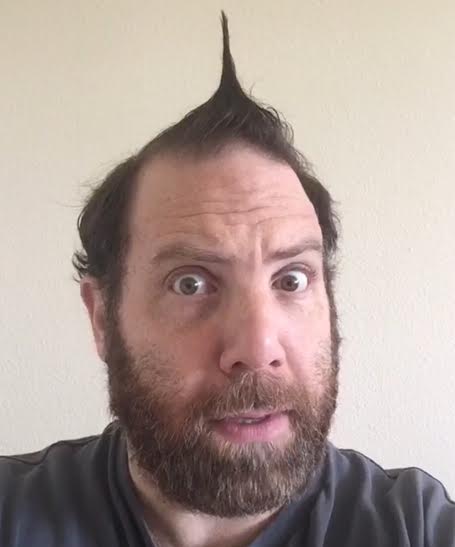
When your hot, your hot! Actor Corey Allen Kotler just booked another feature! Corey Allen Kotler has just got cast in the upcoming feature film entitled, Text Me When It’s Over. Corey Allen Kotler will play, Uncle Moish in this brilliant high school coming of age comedy. It’s a good thing that Text Me When It’s Over is filming in Los Angeles because Corey Allen Kotler is simultaneously filming the feature, Angeles on Tap (opposite Ed Asner) in and around Los Angeles in April 2016! Somehow Corey Allen Kotler still finds time to entertain his fans daily on Vine. For your daily does of Corey Allen Kotler.
.

 Corey Allen Kotler