Corey Allen Kotler | AccessPay sets sights on US market with £2 million debt financing

Manchester, UK-based payments router AccessPay has secured £2 million in debt financing from Clydesdale and Yorkshire Bank amid plans for a recruitment drive and expansion into US markets.

A specialist in cloud-based payments technology, with hundreds of UK-based customers and 35 employees, AccessPay enables payment routing through all of the major UK and international networks including Bacs, Swift, Faster Payments, Sepa and Direct Debit.

With a focus on organic growth, the orgnisation has its sights on increasing its business-reach to more than 10,000 organisations, who will join with other current high-profile clients such as Clifford Thames and European research organisation Cern.

Anish Kapoor, CEO of Accesspay says the funding will enable the business to recruit up to 60 new members of staff, including developers, sales, operations and marketing, before the end of 2017 and provides the platform for expansion into the US market later this year.

The firm has previously raised equity from two primary investors in the US: True Ventures and Route 66 Ventures.

Corey Allen Kotler | US elections done, now Mumbai’s elite can own a luxe home in Trump Towers

Lodha Group plans to resume sales at Trump Tower Mumbai after a post-election hiatus, providing a test for India’s languishing luxury home market, and the U.S. president’s brand.

Lodha, one of India’s largest property developers, will resume marketing apartments in the 75-story development in the next few months, said Abhishek Lodha, managing director of the privately held firm. The building is about 60 percent sold and on target to be completed in 2019, he said.

“We made a conscious decision to not sell in the immediate aftermath of his win because we didn’t want to be seen as taking advantage of the changed political circumstances,” Lodha said in an interview at the company’s offices in Mumbai. “We will start sales in June or July and we’ll know better then.”

Enthusiasm for the Trump brand has faded in some parts of the world since Donald Trump was elected president as he moved to enact controversial policies, including a travel ban on several predominantly Muslim nations. He’s also sought to restrict H1-B visas, which are used in large numbers by Indian companies and outsourcing firms.

The March opening of a Trump hotel in Vancouver was marked by protests, and a Trump residential tower in Toronto put up for sale after its developer defa ..

Gold Facade
Lodha hasn’t had any communication with President Trump as he’s no longer involved with the business, Abhishek Lodha said.

Lodha said he’s confident the Mumbai tower will be a success, with buyers attracted to the building’s post-sales services, a Trump specialty. The tower, which will be sheathed in a “golden-curtain” facade, includes a 24-hour resident manager, membership of a private jet service and access to a seven-acre private park.

Trump Tower Mumbai is one of 31 projects Lodha has underway in India and the U.K. The company is developing the 117-story World One tower in the city, which it bills as the world’s largest residential tower and owns Mumbai’s largest land bank, according to its website.

Sales of luxury housing have taken a hit since India’s government Nov. 8 banned high-denomination notes to crack down on corruption and tax evasion. Real estate has long been a place where Indians have parked cash, often using money on which taxes haven’t been paid.

While the overall market has snapped back since then, the rebound’s mainly been led by affordable housing, Pankaj Kapoor, founder of Mumbai-based Liases Foras Real Estate Rating & Research Pvt, said. Sales of luxury  ..

Going Public
Still, Lodha reported sales reached a monthly record for March, helped by both luxury and mass-market homes. That plus a contribution from its London properties helped push net sales for fiscal 2016-17 up 30 percent to between 83 billion rupees ($1.29 billion) and 85 billion rupees, despite demonetisation and Brexit, the company said.

The company continues to evaluate an initial public offering, Lodha said.

“We said in late 2016 we have an 18-month time-frame to obtain the regulators’ approval and we’ll stick to that,” he said, adding it was too early to speculate on a size of a potential IPO.

“We’d love to be in the public domain because it would give us the ability to create more wealth for our associates and our employees,” he said. “For us that’s the single most important reason to go public, as opposed to raising capital.”

Corey Allen Kotler | CHINA’S Demand for US REAL ESTATE Set to Grow

Marketing US real estate to Chinese investors living in China is a good business and big enough for Warren Buffett who just took his share.  Berkshire Hathaway HomeServices controlled by Warren Buffett’s Berkshire Hathaway Inc. on Monday said it entered a marketing agreement with Juwai.com, China’s largest international property website, to attract wealthy Chinese buyers looking to purchase homes in the United States.

“The United States is a safe, attractive investment opportunity for foreigners, especially the Chinese,” said Peter Turtzo, who is spearheading Berkshire Hathaway HomeServices’ foreign push as senior vice president of international operations, commented. Along with the Canadians the Chinese are the top real estate foreign investors buying in the United States.

Along with the Canadians the Chinese are the top real estate foreign investors buying in the United States “The Global Edge Investment group has been tracking the economic expansion of several American States, and we’re very excited about Colorado. There are more than 10 Fortune 500 and 22 Fortune 1000 companies headquartered in Colorado, with more on the way. Amazon plans to open in Colorado, which will create 1000 full time jobs. This is having a direct effect on real estate growth and demand. For example, new Fort Collins outside down town Denver homes rose 7.8% to $395,427. Colorado Universities are expanding, as is the demand for land suitable for student housing. We, as a company, along with our investors are very confident about the growth in the Greater Denver region over the next 3- 5 years.” – Benjamin Curran, Managing Director of Global Edge Investment.

Denver was named number 1 best city to live in 2016 by U.S. News & World Report. The United States, retained its position as the most popular destination for Chinese real estate investment outside the mainland.

About Berkshire Hathaway
Berkshire Hathaway Inc. is an American Mulitinational conglomerate holding company headquartered in Omaha, Nebraska, United States. The company is known for its control and leadership by Warren Buffett, who is the company’s Chairman of the Board, President, and Chief Executive Officer, and Charlie Munger, the company’s Vice-Chairman of the Board of Directors. According to the Forbes Global 2000 list and formula, Berkshire Hathaway is the fourth largest public company in the world, and the 9th largest conglomerate by revenue.

About Global Edge Investment

Global Edge is a real estate investment and development company with over 20 years of experience. The company carefully examines and analyzes hundreds of land based projects each year, only selecting strategically positioned land in major North American growth corridors.

Global Edge prides itself on its portfolio of smart land investments that secure, diversify, and increase its client’s wealth. The investors have realized excellent return on their investments because Global Edge thoroughly researches and tracks investment cycles before presenting to its clientele.

Global Edge is committed to its investors, and operates with the highest level of transparency and efficiency.

Corey Allen Kotler | The US alone spends $16 billion on plastic surgery — we’re dealing with 300,000 breast implants a year

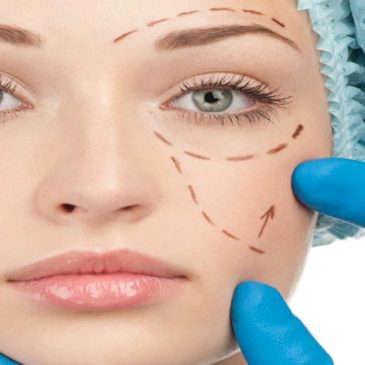
The obsession of the rich and famous with plastic surgery is growing more and more every year. In 2016 alone, 300,000 Americans underwent breast augmentation, while no less than 7 million people opted for anti-wrinkle injections. But how much exactly does the world spend on the vanity of looks?

According to a report published by the American Society of Plastic Surgeons (ASPS), Americans spent more than ever before — $16 billion — on cosmetic plastic surgery and minimally-invasive procedures in 2016. That means that on average, every day, Americans spend a whopping $43 million on plastic surgery.

Costs vary greatly depending on location and surgeon experience, as well as potential insurance coverage (spoiler alert — in the US, you’re rarely covered for this type of intervention). This has pushed many patients to opt for shady, often unqualified clinics, something which ASPS strongly warns against. Plastic surgery can backfire heavily and can pose serious health hazards.

“The most important consideration for patients should be choosing a board-certified, ASPS-member surgeon,” said ASPS President Debra Johnson, MD. “Before you undergo any procedure, make sure you’re putting yourself in the hands of only the most qualified and highly trained plastic surgeons. The cost of any procedure is not nearly as important as doing your homework and selecting a surgeon whose primary focus is your safety.”

The report also indicates that the average price of procedures is constantly going down, by 2.7 percent from 2015 to 2016. But how much does a surgery cost?

According to the report, these are the most popular cosmetic surgeries, along with their average price:

Breast augmentation (290,467 procedures): national average cost of $3,719. Just over 28,000 people removed breast implants. Another 101,000 people had breast lift surgery.
Liposuction (235,237 procedures): national average cost of $3,200
Nose reshaping (223,018 procedures): national average cost of $5,046
Tummy tuck (127,633 procedures): national average cost of $5,798
Buttock augmentation (18,489 procedures) national average cost of $4,356
You can read the entire statistics here.

The report also made a similar list for minimally invasive procedures:

Wrinkle treatment injections (botulinum toxin type-A, such as Botox®, Dysport®) (7 million procedures): national average cost of $385
Hyaluronic acid fillers (2 million procedures): national average cost of $644
Chemical peel (1.3 million procedures): national average cost of $673
Microdermabrasion (775,014 procedures): national average cost of $138
Laser treatments (Intense Pulsed Light) (656,781 procedures): national average cost of $433
This data only comes from procedures conducted by certified ASPS doctors as well as other physicians certified by
American Board of Medical Specialties — the real figure considering unrecognized boards is likely much higher.

Corey Allen Kotler | Huawei’s Latest Effort to Crack the US Market—Getting into AT&T Stores

Huawei’s is making a fresh attempt at launching into the US market to challenge Apple and Samsung’s monopoly on premium smartphones. In its latest attempt to break into America, Huawei is trying to get its Chinese mobile chipset accredited by AT&T.

The world’s third-largest smartphone maker, Huawei’s presence isn’t felt in the States at all, with no US carriers selling the company’s phones for their main services. Nevertheless, it’s worldwide reach is still a threat to Apple and Samsung, and chipset accreditation is vital to breaking into the US market.

Android smartphone makers primarily use Qualcomm’s chipsets, but Huawei uses a Kirin line of processors by Huawei subsidiary HiSilicon. Even if the Chinese chips pass the AT&T accreditation, deals would have to be made to distribute specific phones.

Sources told The Information that there was a possibility of a HiSilicon-powered Huawei phone in the US after discussions between Huawei and AT&T. But it doesn’t look like the former is about to give up on the American Dream anytime soon as evidenced by its latest moves.

Huawei collaborated with Google to manufacture one of the US company’s Nexus smartphones, and they also launched branded phones in the US via Best Buy and Amazon. Walmart also sell an AT&T prepaid service phone made by Huawei, which is cobranded.

However, the brand has had issues with regulation in the past after a 2012 congressional report raised concerns that Beijing was using gear to spy on the US, a claim Huawei denied. Then again, the Chinese company’s market share has increased from 7.8% (2015) to 9.8% last year. This closes the gap significantly with Apple’s 15% and Samsung’s 22% share.

Huawei bringing its global handsets (with its HiSilicon chipset) into the US carrier market is its most recent move after a string of semi-failed attempts, like the disappointing sales of the Honor 8 smartphone.

They are stuck between a rock and a hard place when it comes to US carriers. Verizon is too expensive due to its cellular standard, while T-Mobile is embroiled in a lengthy dispute with its Chinese competitor. Huawei also doesn’t have the advertising advantages afforded to American brands like Samsung, who spend significant amounts on generating publicity during the Super Bowl, for example.

There is also some competition a little closer to home, like ZTE—a Shenzhen-based company—which is the fourth largest smartphone vendor in America. ZTE uses inexpensive models to sell, not to mention its sponsorship deals with several National Basketball Association teams.

Against all odds, Huawei is positive and determined nonetheless.